Introduction
Dash cams have become a fairly common addition to vehicles over the past decade, driven largely by growing interest in having reliable video evidence in the event of accidents, disputes, or unexpected road incidents. The REDTIGER F7N Touch is a front-and-rear dash cam system built around 4K recording, a touch screen interface, and a set of connectivity and convenience features aimed at making footage easier to access and review. This article covers what the F7N Touch actually offers, how its various features tend to be used in everyday driving, who this type of dash cam generally suits, and what’s worth thinking through before installing one in a vehicle.
As with any product breakdown of this kind, the intent isn’t to declare this the definitive best dash cam available, but to walk through its specifications and functionality clearly enough that you can judge whether it fits your particular driving habits and needs.
Key Features
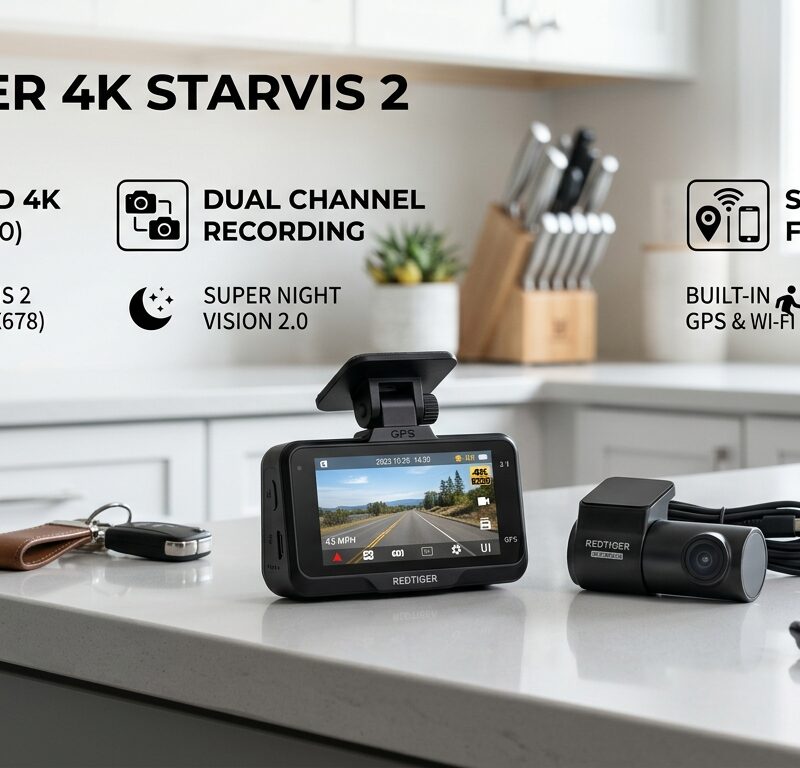
4K STARVIS 2 recording. The front camera uses Sony’s STARVIS 2 sensor technology to record in 4K resolution, which generally provides sharper detail, particularly useful for reading license plates or capturing finer details during both daytime and lower-light driving conditions.
Front and rear camera setup. The system includes both a front-facing and rear-facing camera, allowing footage to be captured from both directions simultaneously, which is relevant for documenting incidents that may occur from behind, such as rear-end collisions, in addition to the more commonly recorded front view.
5GHz WiFi with fast download speeds. The dash cam includes 5GHz WiFi connectivity, with a stated download speed of 20MB/s, intended to allow quicker transfer of recorded footage to a smartphone or other device compared to older 2.4GHz WiFi systems, which tend to be slower.
128GB memory card included. A 128GB card comes bundled with the unit, providing a substantial amount of onboard storage for continuous loop recording without needing to purchase a separate memory card immediately after setup.
Voice control functionality. The camera includes voice command capability, allowing certain functions — such as taking a photo, starting a recording, or other basic commands — to be triggered without needing to physically touch the screen while driving.
3.18-inch touch screen. A touch screen display is built into the unit, intended to make navigating settings, reviewing footage, and adjusting camera options more straightforward compared to button-only interfaces on more basic dash cams.
Built-in GPS. GPS functionality allows the camera to log location and speed data alongside video footage, which can be relevant for providing additional context in the event of an incident or dispute.
Loop recording. Loop recording automatically overwrites the oldest footage once storage capacity is reached, allowing continuous recording without needing to manually delete old files, while still preserving important footage that’s been separately flagged or locked.
Parking mode. This feature allows the camera to continue monitoring the vehicle while parked, typically triggered by motion or impact detection, intended to capture incidents like hit-and-runs or attempted break-ins that occur while the vehicle is unattended.
How It Can Be Used
For everyday driving, the F7N Touch is generally used to continuously record both front and rear views while the vehicle is in motion, providing a video record that can be referenced if an accident, near-miss, or dispute occurs. Because of the loop recording function, the camera doesn’t require manual management of storage under normal use, since older, non-critical footage is automatically overwritten as new footage is recorded.
The touch screen is typically used for adjusting settings, reviewing recent clips directly on the device, or navigating menus without needing a separate app or computer, which can be useful for quick checks immediately after a driving incident.
The voice control feature is generally used while driving, allowing a driver to trigger actions like snapshotting a moment or starting an event recording through a spoken command rather than reaching for the touch screen, which is intended to reduce distraction while operating the vehicle.
The WiFi connectivity is commonly used to transfer footage to a smartphone for reviewing, saving, or sharing important clips, such as documenting an accident for insurance purposes, without needing to physically remove the memory card each time.
GPS data is typically used to provide additional context alongside video footage, such as vehicle speed and location at the time of an incident, which can support insurance claims or disputes by adding objective data points beyond the video itself.
Parking mode is generally used when the vehicle is left unattended, continuing to monitor for motion or impact and recording relevant footage if triggered, which is commonly referenced by drivers concerned about parking lot incidents, hit-and-runs, or vandalism.
Who It May Be Suitable For
Drivers wanting comprehensive front and rear coverage. Because the system includes both a front and rear camera, it’s generally suited to those wanting a more complete picture of incidents from both directions rather than only front-facing footage.
People frequently parking in shared or public spaces. The parking mode feature may particularly appeal to drivers who often park in areas where incidental damage, such as parking lot dings or attempted break-ins, is a realistic concern.
Those who want quick footage access without removing the memory card. The WiFi transfer capability may suit drivers who prefer reviewing or saving footage directly through a smartphone rather than physically handling the memory card each time.
Drivers wanting evidence for insurance or dispute purposes. The combination of high-resolution recording, GPS data, and dual-camera coverage is generally aimed at those who want a fairly thorough video and data record in case of an accident or dispute over fault.
People who prefer touch-based or voice-based controls. Compared to dash cams with only physical buttons, this model may suit those who find touch screens or voice commands more convenient to operate, especially while driving.
Drivers with very basic needs — for example, wanting only occasional, front-facing recording without additional features like parking mode or GPS — may find a simpler, single-camera dash cam sufficient, without needing the added functionality and cost of a more comprehensive system like this one.
Important Things to Consider
Storage management despite loop recording. While loop recording handles ongoing storage automatically, it’s still worth periodically checking that important footage has been properly saved or locked, since standard loop recording will eventually overwrite unlocked files as storage fills up.
Parking mode and battery drain. Depending on the vehicle’s electrical setup, running parking mode continuously can draw power from the car’s battery, so understanding how the camera is wired and whether a hardwire kit or separate battery pack is used is worth considering to avoid unexpectedly draining the vehicle’s battery.
Installation considerations for the rear camera. Setting up a front and rear camera system generally involves running a cable from the front unit to the rear window area, which may require some planning around cable routing, particularly in vehicles where a clean installation matters aesthetically.
WiFi connection range and speed in practice. While 5GHz WiFi is generally faster than 2.4GHz, actual transfer speeds can vary based on device compatibility and distance between the dash cam and the connected smartphone.
Touch screen visibility in direct sunlight. As with many touch screen displays, visibility can sometimes be reduced in bright, direct sunlight, which is a general consideration for any touch-screen-equipped dash cam mounted behind a windshield.
Card longevity with continuous recording. Continuous loop recording puts consistent write-cycles on the memory card over time, so even with a 128GB card included, eventually replacing the card as part of routine maintenance is a reasonable expectation for long-term use.
Comparison of General Categories
Front-and-rear dual-camera dash cams, the category this model belongs to, are generally aimed at drivers wanting more comprehensive incident coverage from both directions, at a higher price point and with more complex installation compared to single-camera units.
Single, front-facing-only dash cams focus purely on recording the road ahead, generally offering a simpler installation and lower cost, suited to drivers who don’t feel a strong need for rear-facing coverage.
Mirror-integrated dash cams combine a rearview mirror replacement with a built-in display and camera system, which some drivers prefer for a cleaner in-cabin look, though they generally involve a different mounting and viewing experience compared to a standalone touch screen unit like this one.
Basic, no-frills dash cams typically skip features like GPS, voice control, or WiFi transfer, focusing purely on continuous recording at a lower price, which may suit drivers who want simple footage capture without added functionality.
Higher-end, app-connected dash cam ecosystems sometimes include additional features like real-time cloud backup or integration with broader vehicle monitoring systems, generally at a higher cost and complexity than a standalone unit like the F7N Touch.
Choosing between these categories generally depends on how much coverage is wanted (front-only versus front-and-rear), how much value is placed on convenience features like touch screens, voice control, and app connectivity, and how much a driver is willing to invest in installation complexity and overall cost for a more comprehensive system.
Frequently Asked Questions
Does the F7N Touch record in both directions simultaneously? Yes, it includes both a front and rear camera, allowing simultaneous recording from both directions while driving.
What resolution does the front camera record in? The front camera uses a 4K STARVIS 2 sensor, providing high-resolution recording intended to capture finer detail such as license plates or road signage.
Does it come with a memory card, or is one needed separately? A 128GB memory card is included with the unit, providing a substantial amount of onboard storage for loop recording without an immediate need for a separate purchase.
How does parking mode work? Parking mode allows the camera to continue monitoring the vehicle while parked, generally triggered by motion or impact detection, and is intended to capture incidents that occur while the vehicle is unattended.
Can footage be transferred to a phone without removing the memory card? Yes, the dash cam includes 5GHz WiFi connectivity, allowing footage to be transferred directly to a connected smartphone at a stated download speed of 20MB/s.
Is voice control necessary to operate the camera? No, voice control is an additional convenience feature; the camera can also be operated through its touch screen interface without relying on voice commands.
Does it include GPS tracking? Yes, built-in GPS logs location and speed data alongside recorded video, which can provide additional context in the event of an accident or dispute.
Conclusion
The REDTIGER F7N Touch 4K Dash Cam combines front-and-rear recording, a 3.18-inch touch screen, voice control, GPS logging, and parking mode into a fairly comprehensive dash cam system. Its 4K STARVIS 2 sensor and included 128GB memory card are aimed at providing both high-resolution footage and ample storage for continuous loop recording, while its WiFi connectivity is designed to simplify transferring footage for review or sharing.
Whether this specific model fits a given driver’s needs depends on how much value is placed on front-and-rear coverage, convenience features like touch screen and voice control, and additional functionality like parking mode and GPS logging. For those wanting a fairly complete, feature-rich dash cam system rather than a simpler single-camera setup, the F7N Touch offers a well-rounded combination of recording quality and everyday usability features.