Introduction
Frying food has always come with a trade-off. The results — crispy exteriors, tender interiors, that satisfying crunch — are genuinely appealing. The process, however, involves large quantities of hot oil, significant cleanup, and a cooking method that adds considerable fat and calories to whatever goes into it. For decades, home cooks who wanted crispy food without deep frying were left with the oven as the primary alternative, which works but rarely replicates the texture that makes fried food so appealing in the first place.
The air fryer changed that equation in a meaningful way. By circulating hot air at high speed around food in a compact cooking chamber, air fryers produce results that come significantly closer to deep-fried texture than conventional oven roasting — with a fraction of the oil, faster cooking times, and a much smaller footprint than a full-size oven. The category has grown rapidly over the past several years, and the Ninja AF101 has remained one of the most consistently popular models throughout that growth period.
This article takes a detailed, balanced look at what the Ninja AF101 offers, how its four core functions work in practice, who tends to find it most useful, and what’s worth understanding before deciding whether it fits your cooking routine and kitchen space.
What Is the Ninja AF101?
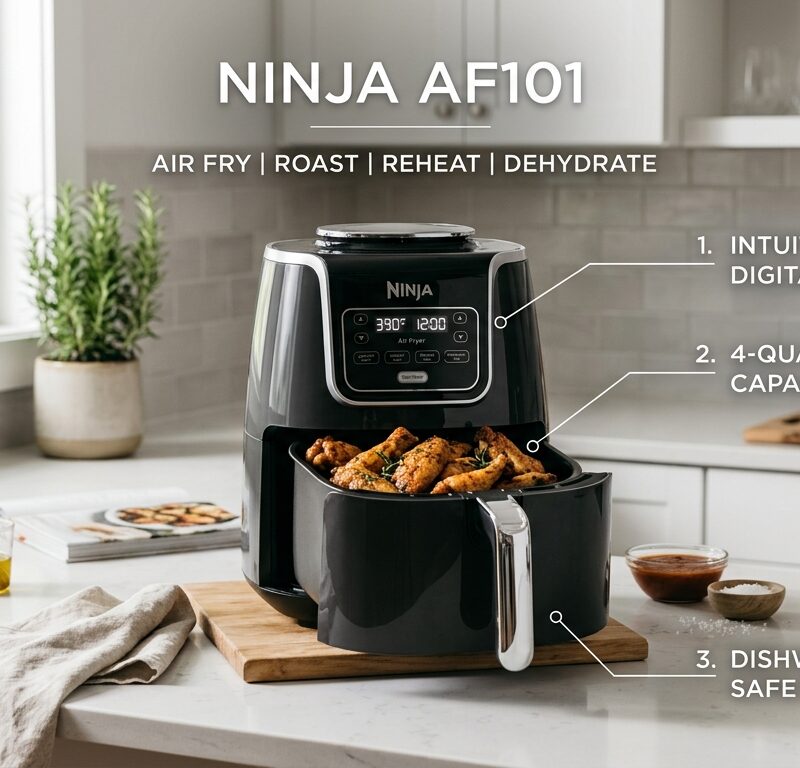
The Ninja AF101 is a 4-quart capacity air fryer produced by Ninja, a brand that has established a strong presence in the countertop cooking appliance category. It operates on 1,550 watts and covers a temperature range of 105°F to 400°F, supporting four distinct cooking functions — Air Crisp, Roast, Reheat, and Dehydrate. The unit comes in grey, includes dishwasher-safe parts for simplified cleanup, and ships with a recipe guide containing 20 meal ideas.
Ninja positions the AF101 as an accessible, practical entry point into air fryer cooking — capable enough to handle a genuine range of everyday cooking tasks, compact enough for kitchens where counter space is limited, and simple enough in its operation that new users can produce good results from the first session without an extensive learning period.
Key Features of the Ninja AF101
4-Quart Capacity
The 4-quart basket capacity positions the AF101 as a mid-size air fryer suited to one to three people for most cooking applications. It comfortably handles a pound of chicken wings, a batch of French fries for two to three servings, a medium-sized piece of fish, or a generous portion of roasted vegetables in a single cooking session.
For a single person or couple, the capacity is genuinely practical for everyday cooking. For a family of four or more, it may require cooking in batches for larger meals — a common consideration with air fryers in this size class. Understanding your typical serving needs and comparing them to a 4-quart volume before purchasing prevents the disappointment of consistently needing to cook in multiple rounds.
Four Cooking Functions
Air Crisp is the primary function and the one most associated with air fryer cooking. It circulates superheated air at high speed around food, producing a crispy exterior without submerging the food in oil. A light coating of oil — often just a spray — is typically all that’s needed to achieve texture results that approach deep-frying. Chicken pieces, frozen foods, vegetables, and snack foods are all natural candidates for this function.
Roast applies heat in a manner suited to larger, denser foods that benefit from more even, penetrating heat rather than maximum surface crisping. Whole chicken thighs, pork tenderloin, root vegetables, and similar items roast well in this mode, producing results comparable to oven roasting in a fraction of the time due to the compact cooking environment.
Reheat addresses one of the most common kitchen frustrations — bringing leftover food back to life without the sogginess that microwave reheating often produces. Pizza, fried chicken, spring rolls, and similar foods that lose their texture in a microwave come out of the air fryer’s reheat function significantly closer to their original state, with restored crispiness rather than steamed-soft results.
Dehydrate uses the low end of the temperature range — down to 105°F — to slowly remove moisture from food over an extended period. Beef jerky, fruit leather, dried herbs, vegetable chips, and similar dehydrated foods can all be prepared using this function, which opens up a category of food preparation that typically requires a dedicated dehydrator appliance.
Temperature Range: 105°F to 400°F
The breadth of this temperature range is directly tied to the appliance’s functional versatility. Most air fryers cover roughly 180°F to 400°F, which handles crisping and roasting but doesn’t reach low enough for dehydration. The AF101’s floor of 105°F extends the range meaningfully downward, enabling the dehydrate function that distinguishes it from simpler models.
At the high end, 400°F is sufficient for the kind of rapid surface crisping that air frying is known for, producing properly browned exteriors on chicken, potatoes, and similar foods within realistic cooking times.
1,550 Watts
At 1,550 watts, the AF101 is a moderately powerful air fryer that heats up quickly and maintains consistent temperature during cooking. This wattage is high enough to produce proper crisping results without the extended cooking times that lower-wattage models sometimes require, while remaining within the capacity of standard kitchen outlets.
Dishwasher-Safe Parts
The basket and crisper plate — the components that come into direct contact with food — are dishwasher-safe, which is a meaningful practical feature for an appliance used daily. Air fryer baskets accumulate grease and food residue that can be tedious to clean by hand, particularly in the perforated crisper plate. Being able to place these components in the dishwasher after each use significantly reduces the friction of incorporating the appliance into a regular cooking routine.
Included Recipe Guide
The 20-recipe guide included with the AF101 provides new users with a structured starting point — tested recipes with air fryer-specific timing and temperature guidance. For someone new to air frying who isn’t sure where to begin, having a set of recipes developed specifically for the machine removes the guesswork of adapting conventional oven recipes for the first time.
How the Ninja AF101 Can Be Used
Everyday Crispy Foods Without Deep Frying
This is the core use case for most AF101 owners. Chicken wings, drumsticks, and thighs develop genuinely crispy skin with minimal oil. French fries — whether homemade from fresh potatoes or frozen from a bag — come out with proper texture in a fraction of the time a conventional oven requires. Fish fillets, breaded shrimp, and similar seafood crisp up cleanly without the mess of a frying pan full of oil.
The practical impact on daily cooking is that a wide range of foods previously associated with either deep frying or lengthy oven baking become accessible on a weeknight timeline, without the cleanup and caloric load of oil-based frying.
Reheating Leftovers with Restored Texture
For households that regularly eat leftovers, the reheat function alone has genuine daily value. Pizza reheated in an air fryer comes out with a crispy base rather than the chewy, steamed texture microwave reheating produces. Leftover fried chicken regains much of its original crispiness. Spring rolls, samosas, and other foods with crispy exteriors that microwave poorly respond exceptionally well to air fryer reheating.
Roasting Vegetables
Roasted vegetables — Brussels sprouts, broccoli, cauliflower, asparagus, sweet potatoes — are among the most reliably impressive results an air fryer produces. The rapid, circulating heat caramelizes the exterior of vegetables far faster than a conventional oven, producing properly browned, slightly crispy results in 10 to 15 minutes rather than the 25 to 35 minutes a full oven requires.
For households incorporating more vegetables into their diet, the air fryer’s speed and the quality of its vegetable roasting results make it a genuinely useful everyday tool.
Cooking Proteins Quickly
Chicken breasts, salmon fillets, pork chops, and similar proteins cook efficiently in the AF101, typically in 12 to 20 minutes depending on thickness and starting temperature. The compact cooking environment circulates heat evenly around the protein, reducing cooking time compared to an oven while producing a more evenly cooked result than a stovetop pan.
Making Homemade Snacks and Dehydrated Foods
The dehydrate function opens up a category of food preparation that most kitchen appliances don’t support. Homemade beef jerky, dried fruit slices, vegetable chips, and similar snacks can be prepared at home over several hours using the low-temperature setting. For households that buy these products regularly, making them at home offers control over ingredients, seasoning, and preservatives that commercial versions don’t allow.
Cooking Frozen Foods More Effectively
Frozen foods — nuggets, fish sticks, mozzarella sticks, egg rolls, and similar products — typically specify oven cooking as the preparation method, which produces adequate results but rarely matches the crispiness of the product’s packaging photography. The air fryer, with its rapid hot air circulation, produces noticeably better results with most frozen foods than a conventional oven in the same timeframe, making it the preferred method for these products in households that eat them regularly.
Who the Ninja AF101 May Be Suitable For
Individuals and Small Households
The 4-quart capacity is proportioned for one to three people for most everyday cooking applications. A couple eating dinner, a single person preparing a week of meal prep components, or a small household that eats in shifts all fall within the range this capacity serves effectively.
Health-Conscious Cooks
For people actively working to reduce oil consumption without giving up crispy, satisfying food, the air fryer’s core function directly supports that goal. The difference in oil used between deep frying and air frying the same food is substantial, and for households making that trade-off regularly, the cumulative impact over months of daily use is meaningful.
Busy Weeknight Cooks
The speed advantage of the air fryer over a conventional oven — typically 20 to 40% faster for most foods — is particularly relevant for weeknight dinners when time is compressed. Foods that would take 30 to 40 minutes in an oven often finish in 15 to 20 minutes in the air fryer, which changes what’s achievable on a Tuesday evening.
People Who Eat Leftover Foods Regularly
For households where leftovers are a regular part of the weekly eating pattern, the reheat function’s ability to restore crispy texture to foods that microwave poorly is a consistently appreciated capability that improves the leftover-eating experience in a straightforward way.
First-Time Air Fryer Buyers
The AF101’s combination of accessible pricing, straightforward operation, four useful functions, and included recipe guide makes it a natural entry point for someone buying their first air fryer. It covers the core air fryer use cases without overwhelming new users with excessive settings, and its results are consistent enough to build confidence in the format from early sessions.
People Interested in Home Food Dehydration
For those curious about making their own jerky, dried fruit, or vegetable chips without purchasing a dedicated dehydrator, the AF101’s dehydrate function provides that capability within an appliance that serves multiple other cooking purposes simultaneously.
Important Things to Consider
Batch Cooking for Larger Households
Four quarts of cooking space is genuinely limiting for households of four or more people who want to cook a complete meal in a single batch. Overcrowding the basket — filling it beyond the recommended level — compromises airflow and results in steamed rather than crisped food. For larger households, either accepting batch cooking as part of the routine or considering a larger-capacity model from the outset avoids a recurring frustration.
Learning Curve for Timing and Temperature
Air fryers cook faster than conventional ovens, which means recipes developed for oven cooking don’t translate directly without adjustment. New users often find that the first few sessions involve some experimentation — food that’s done earlier than expected, or that needs more time than an adapted recipe suggests. Building familiarity with how the AF101 cooks specific foods you make regularly takes a handful of sessions and becomes second nature quickly, but the initial adjustment period is worth anticipating.
Preheating
Like a conventional oven, the AF101 benefits from a brief preheating period before food goes in — typically two to three minutes. Some users skip this step and still get acceptable results, but preheating contributes to more consistent output, particularly for foods where immediate surface crisping at the start of cooking affects the final result.
Not a Replacement for All Cooking Methods
The air fryer excels at specific types of cooking — crisping, roasting, reheating — and is less suited to others. Foods with wet batters don’t crisp properly in an air fryer the way they do in a deep fryer, as the batter tends to drip through the basket. Very large cuts of meat, soups, sauces, and anything requiring significant liquid are better suited to other cooking methods. Understanding the air fryer as a complement to existing kitchen tools rather than a replacement for all of them sets realistic expectations.
Noise During Operation
Air fryers operate with a fan running throughout the cooking cycle, which produces a consistent noise level during use. In open-plan living spaces or quieter households, this is worth being aware of, though the sound level is generally comparable to a range hood fan rather than anything more disruptive.
How the Ninja AF101 Compares to Other Cooking Methods
Conventional Oven
A full-size oven has substantially more cooking capacity and can handle a much broader range of cooking tasks than any countertop air fryer. The air fryer’s advantages are speed — faster preheat, faster cooking — and superior crisping results for foods in the categories it handles well. For cooking a full roast, baking bread, or preparing a large holiday meal, the oven remains the appropriate tool. For weeknight vegetables, proteins, and snacks where speed and texture matter, the air fryer consistently outperforms the conventional oven.
Deep Fryer
A deep fryer produces results that are genuinely different from air frying — foods cooked in oil develop a specific texture and flavor from the direct oil contact that air frying doesn’t fully replicate. For households that specifically want authentic deep-fried results, the air fryer is an approximation rather than an equivalent. For those who want crispy food with substantially less oil and none of the mess, temperature management, and safety concerns of hot cooking oil, the air fryer is a practical and satisfying alternative.
Microwave
The microwave’s speed advantage for reheating is significant, and for heating foods where texture isn’t the priority — soups, sauces, leftovers in sauce — it remains the more practical choice. For foods where texture matters — anything crispy — the air fryer’s reheat results are substantially better than microwave reheating, which tends to produce steamed, soft results regardless of the food being reheated.
Toaster Oven
A toaster oven and an air fryer occupy overlapping but distinct roles. Toaster ovens handle a broader range of tasks including toast, baking, and broiling, while producing less impressive crisping results than a dedicated air fryer. Some combination appliances incorporate both functions, but a standalone air fryer like the AF101 outperforms a standard toaster oven specifically for the crisping and roasting tasks it’s built around.
Instant Pot and Pressure Cookers
Instant Pots and air fryers are frequently compared because both have become popular countertop appliances simultaneously, but they serve fundamentally different purposes. Pressure cooking uses moist heat and pressure to dramatically shorten cooking time for tough cuts and liquid-based dishes. Air frying uses dry circulating heat to produce crispy results. They’re complementary rather than competitive — many households that own an Instant Pot find the air fryer covers the cooking needs the pressure cooker doesn’t address.
Frequently Asked Questions
Does the AF101 need to preheat before use?
A brief two to three minute preheat is recommended for best results, particularly for foods where immediate surface crisping at the start of cooking matters. Some foods — particularly frozen items — can go in without preheating with acceptable results, but consistent preheating improves output quality across most cooking applications.
Can I cook raw chicken in the AF101?
Yes. Raw chicken — breasts, thighs, drumsticks, and wings — all cook safely and effectively in the AF101. Using a meat thermometer to confirm internal temperature reaches 165°F before serving is always recommended regardless of cooking method, and this remains good practice with air fryer cooking.
How much oil does air frying actually require?
For most foods, a light spray of oil — enough to lightly coat the surface — is all that’s needed. Some foods with sufficient natural fat content, like chicken with skin or fatty cuts of meat, may not require any added oil at all. The reduction in oil compared to deep frying is substantial — tablespoons versus cups per session.
Can I use aluminum foil or parchment paper in the basket?
Yes, with caution. Perforated parchment paper designed for air fryers can be used to reduce cleanup and prevent sticking for certain foods. Aluminum foil can be used in limited circumstances but should never block the basket’s airflow perforations, as this compromises the cooking process. Keeping the base of the basket clear for proper air circulation is the key principle.
How loud is the AF101 during operation?
The AF101 operates with a consistent fan sound throughout the cooking cycle, comparable to a range hood or desktop computer fan. It’s not disruptively loud but is audible in a quiet space, which is worth considering for open-plan living environments or noise-sensitive households.
Is the basket truly dishwasher safe?
Yes. The basket and crisper plate are listed as dishwasher safe. Hand washing is also straightforward — warm soapy water and a non-abrasive sponge handle most residue effectively. Avoiding metal scourers preserves the non-stick coating on the crisper plate.
What’s the difference between Air Crisp and Roast modes?
Air Crisp operates at higher temperatures and maximum fan speed to produce maximum surface crisping quickly. Roast uses heat distribution optimized for cooking through denser, larger foods more evenly, with results more comparable to conventional oven roasting. For thin, crispy foods, Air Crisp is typically the appropriate mode. For thicker cuts and larger pieces, Roast tends to produce better results.
Can the AF101 dehydrate meat for jerky?
Yes. The 105°F minimum temperature and dehydrate function are specifically designed to support jerky making and other food dehydration applications. Dehydration takes several hours at low temperature — the process is slow by design, as the goal is moisture removal rather than cooking — and the AF101 handles this extended, low-heat operation as a dedicated function.
Conclusion
The Ninja AF101 represents a well-executed version of what an accessible, everyday air fryer should be. Its four functions — Air Crisp, Roast, Reheat, and Dehydrate — cover a genuinely useful range of cooking tasks, and the 105°F to 400°F temperature range makes the dehydrate function a real and usable capability rather than a marketing addition. The 4-quart capacity suits small households well, and the dishwasher-safe basket and crisper plate reduce the cleanup friction that might otherwise discourage daily use.
Its limitations are real but clearly defined — it’s not designed for large families cooking full meals in a single batch, it’s not a replacement for every cooking method, and the learning curve for timing and temperature adaptation takes a session or two to work through. Within those realistic parameters, it performs consistently and produces the kind of results — crispy vegetables, properly cooked proteins, revived leftovers — that make it a frequently used tool rather than an impulse purchase gathering dust on a shelf.
For small households, health-conscious cooks, busy weeknight meal preparers, and anyone curious about what air frying actually delivers in daily practice, the AF101 offers a reliable and well-rounded introduction to the format.