Introduction
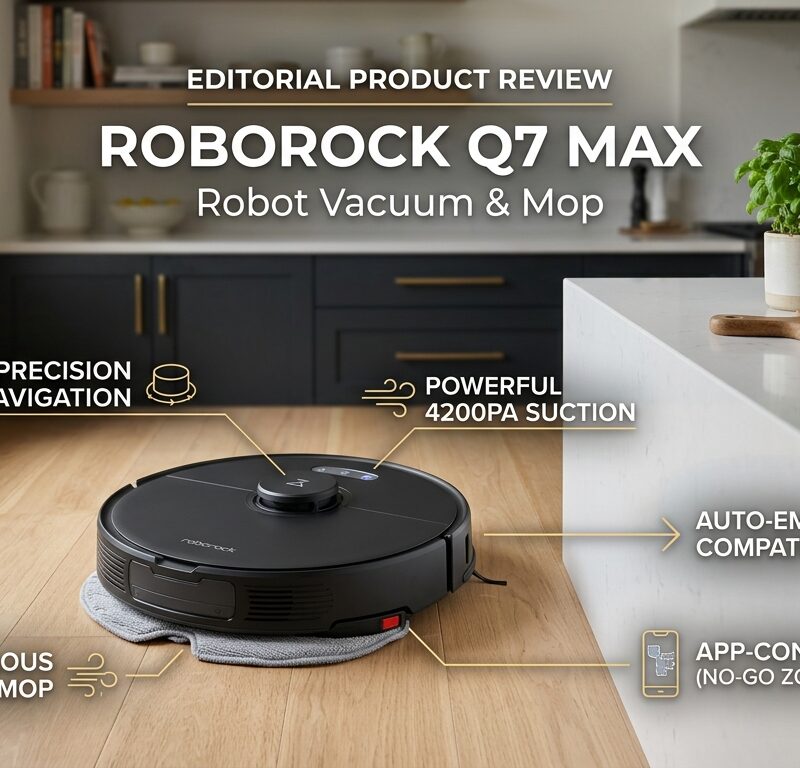
Robot vacuums have shifted from a novelty appliance to a fairly mainstream cleaning tool over the past several years, with newer models increasingly combining vacuuming and mopping into a single device rather than requiring two separate machines. The Roborock Q7 L5 sits in that combined vacuum-and-mop category, positioned as an upgrade over the earlier Q5 Pro model, with a focus on stronger suction, improved navigation, and multi-level mapping for homes with more than one floor. This article walks through what the Q7 L5 actually offers, how its various features tend to be used in everyday cleaning routines, who this type of robot vacuum generally suits, and what’s worth thinking through before adding one to a household.
As with any product breakdown like this, the goal isn’t to declare it the top choice in its category, but to lay out the specifics clearly enough that you can compare them against your own home layout, flooring types, and cleaning habits.
Key Features
8,000Pa suction power. Suction strength is one of the more commonly referenced specifications for robot vacuums, and 8,000Pa represents a notably strong pull compared to entry-level models. Stronger suction is generally associated with better performance on carpets and in picking up finer debris like dust and pet hair.
Upgrade from the Q5 Pro. The product is explicitly positioned as a step up from Roborock’s earlier Q5 Pro model, which suggests improvements in areas like suction power, navigation, or mapping features compared to that earlier generation, aimed at buyers looking for a more capable option within the same general product line.
Dual Anti-Tangle System. This refers to a design feature aimed at reducing the amount of hair and fibers that wrap around the vacuum’s brush rollers during use, which is a common maintenance issue with robot vacuums, particularly in households with pets or long hair.
LiDAR navigation. LiDAR-based navigation uses laser distance sensors to map out a room in real time, which generally allows for more precise and efficient movement patterns compared to older bump-and-turn or infrared-based navigation systems used in more basic robot vacuums.
Multi-level mapping. This feature allows the vacuum to store and recognize maps for multiple floors of a home, meaning it can maintain separate cleaning maps for, say, an upstairs and downstairs level, rather than needing to remap each time it’s moved between floors.
Vacuum and mop combo functionality. Rather than being a vacuum-only device, the Q7 L5 combines suction-based vacuuming with a mopping function, generally intended for hard flooring like tile, hardwood, or laminate, in addition to standard carpet vacuuming.
Self-charging capability. Like most modern robot vacuums, the unit is designed to return to its charging dock automatically when its battery runs low, allowing it to resume cleaning without manual intervention once recharged.
How It Can Be Used
For everyday cleaning, the Q7 L5 is generally used to handle routine floor maintenance — picking up dust, crumbs, pet hair, and other everyday debris across a home’s floors — without requiring manual vacuuming every time. Many users schedule cleaning sessions through a companion app, allowing the robot to run automatically at set times, such as during the day while residents are away from home.
The LiDAR navigation and multi-level mapping work together to help the vacuum cover a space methodically rather than randomly, and to remember distinct layouts for different floors, which is especially useful for multi-story homes where cleaning needs and furniture layouts differ between levels.
The mopping function is generally used specifically on hard flooring, running either after a vacuuming pass or as a separate function depending on how the device is configured, to handle light dusting or grime on tile, hardwood, or similar surfaces. This is typically not intended to replace deep mopping for heavily soiled floors, but rather to maintain everyday cleanliness.
The Dual Anti-Tangle System comes into play continuously during operation, particularly in homes with pets or residents with long hair, where hair wrapping around brush rollers is a common and often frustrating maintenance issue with standard robot vacuums.
The 8,000Pa suction is generally most noticeable on carpeted areas or when picking up finer dust and pet hair, where stronger suction tends to make a more visible difference compared to lower-power models.
Who It May Be Suitable For
Multi-story households. The multi-level mapping feature is specifically useful for homes with more than one floor, where maintaining separate, accurate maps for each level helps the vacuum clean efficiently without needing to remap every time it’s relocated.
Pet owners. Between the strong suction and the Dual Anti-Tangle System, this model may particularly suit households with pets, where pet hair pickup and reduced brush roller tangling are common priorities.
People with a mix of carpet and hard flooring. Since the unit combines vacuuming and mopping, it may suit homes with both carpeted rooms and hard flooring areas, allowing one device to handle both surface types rather than needing separate tools.
Those upgrading from a more basic robot vacuum. Given its positioning as an upgrade from the Q5 Pro, this model may particularly appeal to existing robot vacuum owners looking for stronger suction or improved navigation and mapping compared to an earlier or more basic unit.
People who want automated, routine floor maintenance. Those looking to reduce the frequency of manual vacuuming and mopping, particularly for everyday maintenance rather than deep cleaning, are a natural fit for this type of combo device.
Households with very heavily soiled floors requiring deep scrubbing, or homes with a lot of clutter and cords on the floor that could interfere with automated navigation, may find that a robot vacuum like this one works best as a supplement to occasional manual cleaning rather than a full replacement.
Important Things to Consider
Maintenance requirements. Even with anti-tangle features, robot vacuums generally require periodic maintenance — emptying the dustbin, cleaning brush rollers, refilling water for mopping, and occasionally replacing filters — to maintain consistent performance over time.
Mopping limitations. The mopping function on combo devices like this one is generally designed for light, everyday maintenance on hard floors rather than deep scrubbing of heavily soiled or stained areas, which is worth keeping in mind for realistic expectations.
Navigation around obstacles and clutter. While LiDAR navigation generally improves mapping accuracy, floors with a lot of loose cords, small objects, or clutter can still interfere with a robot vacuum’s ability to navigate efficiently, so some tidying is typically still needed before automated cleaning sessions.
Suction and carpet pile height. While 8,000Pa suction is relatively strong, very thick or high-pile carpets can still present more of a challenge for any robot vacuum compared to low-pile carpet or hard flooring.
App and connectivity dependency. Features like scheduling, multi-level mapping, and remote control typically rely on a companion smartphone app and home Wi-Fi connectivity, which is worth factoring in for households that prefer minimal reliance on connected devices.
Charging dock placement. Since the unit is self-charging, the dock needs a suitable, accessible location that the vacuum can reliably return to, which may require some initial planning depending on room layout.
Comparison of General Categories
Combo vacuum-and-mop robot vacuums, the category this model belongs to, are designed to handle both vacuuming and light mopping in one device, generally suited to households with a mix of carpet and hard flooring who want to reduce the number of separate cleaning tools needed.
Vacuum-only robot vacuums focus purely on suction-based cleaning without a mopping function, which may suit households with entirely carpeted floors or those who prefer to mop manually or with a separate dedicated mop.
Higher-end robot vacuums with self-emptying stations add an automated dustbin-emptying base, reducing how often the bin needs to be manually emptied, generally at a higher price point and with a larger overall footprint for the base station.
Basic, entry-level robot vacuums typically use simpler navigation systems, like infrared sensors or random bump-and-turn movement patterns, and often lack features like multi-level mapping or advanced anti-tangle systems, generally suited to smaller, simpler living spaces or more budget-conscious buyers.
Traditional upright or canister vacuums remain a manual alternative, offering more control and typically stronger suction for deep cleaning, dedicated attachments, and stairs, but requiring active, hands-on operation rather than automated scheduling.
The right category generally depends on home size and layout, the mix of flooring types present, how much automation is desired, and how much ongoing maintenance a household is willing to take on to keep a robot vacuum performing well over time.
Frequently Asked Questions
Does the Q7 L5 handle both carpet and hard flooring? Yes, it’s designed as a combo vacuum-and-mop unit, with vacuuming suited to both carpet and hard floors, and mopping generally intended for hard flooring surfaces like tile or hardwood.
What does multi-level mapping actually do? It allows the vacuum to store separate maps for different floors of a home, so it can recognize and clean each level according to its own layout rather than needing to remap every time it’s moved between floors.
Is the mopping function suitable for deep cleaning heavily soiled floors? Generally, mopping functions on combo robot vacuums like this one are intended for light, everyday maintenance rather than deep scrubbing of heavily soiled or stained flooring.
What is the Dual Anti-Tangle System designed to prevent? It’s designed to reduce the amount of hair and fibers that wrap around the vacuum’s brush rollers during operation, which is a common maintenance issue, especially in homes with pets or long hair.
Does it require Wi-Fi to function? Core cleaning functions may work without connectivity, but features like scheduling, remote control, and multi-level map management generally require a companion app and home Wi-Fi connection.
How does it return to its charging dock? The unit is designed to self-charge, automatically navigating back to its docking station when battery levels run low, and resuming cleaning once recharged if a session was interrupted.
Is this suitable for homes with a lot of pet hair? The combination of 8,000Pa suction and the Dual Anti-Tangle System is generally aimed at handling pet hair more effectively than lower-power or non-tangle-resistant models, making it a reasonable fit for pet-owning households.
Conclusion
The Roborock Q7 L5 Robot Vacuum and Mop Combo combines strong suction, LiDAR-based navigation, and multi-level mapping into a single automated cleaning device, positioned as an upgrade over the earlier Q5 Pro model. Its Dual Anti-Tangle System and combined vacuum-and-mop functionality are aimed at simplifying everyday floor maintenance, particularly for households with pets, multiple floors, or a mix of carpet and hard flooring.
Whether this specific model fits a given household depends on home layout, flooring types, how much automated cleaning is desired, and how much ongoing maintenance a household is prepared to handle to keep performance consistent over time. For those looking for a fairly capable, feature-rich robot vacuum that consolidates vacuuming and light mopping into one device, the Q7 L5 offers a comprehensive set of features aimed at everyday, automated floor care.