Introduction
Keeping floors clean is one of those household tasks that never truly finishes. You vacuum on Saturday, and by Tuesday there’s pet hair on the carpet again. You mop the kitchen, and by the next morning there are footprints across the tile. For households with pets, children, or simply the reality of daily foot traffic, floor maintenance is a recurring, time-consuming obligation that competes with everything else demanding attention in a busy life.
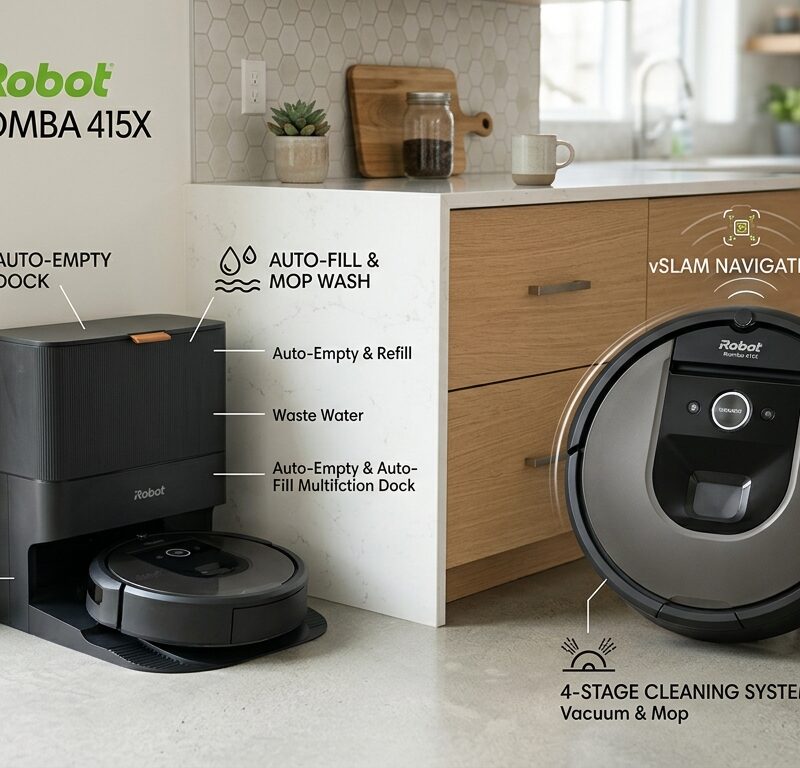
Robot vacuum technology has been evolving steadily for years, but the gap between entry-level robotic cleaners and genuinely capable, autonomous floor maintenance systems has narrowed dramatically in the most recent generation of devices. The iRobot Roomba 415X represents the more capable end of that spectrum — a robot vacuum and mop combination that doesn’t just clean autonomously but handles its own maintenance for up to 90 days through a multifunction dock that self-empties debris, self-cleans the mop pads, and hot-dries them after use.
This article takes a thorough look at what the 415X offers across its full feature set, how it functions in real household environments, who tends to get the most value from it, and what’s worth understanding before deciding whether it fits your home and cleaning needs.
What Is the iRobot Roomba 415X?
The Roomba 415X is a combined robot vacuum and mopping unit produced by iRobot, one of the longest-established brands in the robot vacuum category. It’s designed to handle both dry debris pickup and wet floor mopping in a single device, guided by smart obstacle avoidance technology and supported by a multifunction dock that handles emptying, mop cleaning, and drying automatically.
The headline specifications — 20,000Pa suction, 90-day self-emptying capability, hot drying of mop pads, and lifting spinning mops — position it as a high-capability device aimed at households that want genuinely hands-off floor maintenance rather than a robotic cleaner that still requires frequent manual intervention to function effectively.
iRobot’s approach with the 415X reflects the current direction of the category: reducing the number of times a user needs to interact with the robot between cleaning sessions, handling more of the maintenance loop automatically, and using intelligent navigation to avoid obstacles that would interrupt cleaning cycles or damage the robot.
Key Features of the iRobot Roomba 415X
20,000Pa Suction Power
Suction power measured in pascals (Pa) is one of the primary indicators of a robot vacuum’s ability to pick up different types of debris across different floor surfaces. At 20,000Pa, the 415X sits at the high end of the consumer robot vacuum range, providing the kind of suction necessary for deep carpet cleaning, effective pet hair removal from both hard floors and fabric surfaces, and pickup of heavier debris that lower-powered units tend to scatter or leave behind.
For households with pets — particularly those with dogs or cats that shed consistently — high suction power is directly relevant to whether the robot actually removes embedded hair from carpet fibers rather than simply moving it around. The 415X’s suction level is designed to address this specific challenge, which is reflected in the product’s positioning as ideal for pet hair.
90-Day Self-Emptying Capability
One of the most significant limitations of earlier robot vacuums was the frequency with which the onboard dustbin needed to be manually emptied — often after every cleaning session for a moderately sized home. The 415X addresses this through its multifunction dock, which automatically empties the robot’s internal dustbin into a larger collection bag after each cleaning run.
The 90-day capacity refers to how long the dock’s collection bag can hold accumulated debris before requiring replacement under typical household conditions. For most households, this means approximately three months of regular cleaning sessions before any manual intervention with the waste collection is needed — a meaningful reduction in the routine maintenance the system demands.
Multifunction Dock: Self-Emptying, Self-Cleaning, and Hot Drying
The dock that accompanies the 415X goes beyond simple charging and debris collection. It performs three distinct maintenance functions automatically:
Self-emptying extracts debris from the robot’s dustbin after each run, transferring it to the larger dock collection bag without user involvement.
Self-cleaning addresses the mop pads after a mopping session. Used mop pads accumulate dirt, bacteria, and residue that, if left unaddressed, would be redistributed across the floor during the next cleaning cycle. The dock’s automatic cleaning of the mop pads between sessions maintains their effectiveness and hygiene without requiring the user to manually wash them after each use.
Hot drying uses elevated temperature to dry the mop pads after cleaning, which serves two purposes. First, wet mop pads left sitting create conditions conducive to mildew and bacterial growth, which produces unpleasant odors and compromises hygiene. Second, dried pads are ready for the next cleaning session without a waiting period. The hot drying feature directly addresses both concerns automatically.
Together, these three dock functions create a largely self-maintaining cleaning system that significantly reduces the touchpoints required from the user between cleaning sessions.
Lifting Spinning Mops
The mop mechanism on the 415X uses spinning mop pads rather than a static dragging cloth, which produces more active scrubbing action against the floor surface. Spinning mops apply rotational friction to the floor, which is more effective at loosening dried-on residue, light stains, and grime than a passive dragging motion.
The lifting capability is equally important. When the robot transitions from hard flooring to carpet, the mop pads automatically lift to avoid wetting the carpet — a problem that has affected earlier combined vacuum-mop robots, which would drag wet mops across carpeted surfaces during the same cleaning run. Automatic mop lifting means the 415X can clean mixed-flooring homes — hard floors and carpet in the same space — in a single session without the user needing to restrict the robot’s access or run separate cleaning modes.
Smart Obstacle Avoidance
Navigation and obstacle avoidance are areas where robot vacuum technology has improved dramatically in recent years, and the 415X incorporates intelligent avoidance systems designed to identify and navigate around objects that would interrupt cleaning or damage the robot. Pet waste, cables, shoes, and small objects on the floor are examples of obstacles that less sophisticated robots frequently encounter problematically — either getting stuck, pushing objects around, or in the case of pet waste, spreading it across the floor.
Smart obstacle avoidance systems use a combination of sensors and, in more sophisticated implementations, camera-based recognition to identify and route around these hazards, maintaining cleaning coverage of the floor while avoiding problematic encounters.
Pet Hair Optimization
The 415X is specifically positioned as suitable for pet hair, which encompasses several design considerations beyond raw suction power. Brush roll design, airflow path, and the way the robot handles hair without tangling are all relevant to how effectively it deals with pet hair across both hard floors and carpet. The combination of high suction and a brush system designed to manage rather than tangle around hair makes it more relevant for pet-owning households than general-purpose robot vacuums that don’t specifically account for this challenge.
How the iRobot Roomba 415X Can Be Used
Daily Autonomous Floor Maintenance
The most fundamental use case is scheduled, autonomous daily cleaning — setting the robot to run on a schedule while the household is occupied with other activities or away from home, maintaining floor cleanliness consistently without manual intervention. With 90-day self-emptying capability, the system can run daily sessions for months without the user needing to interact with waste collection.
For households where floor cleanliness degrades quickly due to pet hair, foot traffic, or cooking activity, daily automated cleaning maintains a baseline level of cleanliness that would otherwise require manual effort several times per week.
Combined Vacuuming and Mopping in a Single Run
On hard floor surfaces, the 415X can vacuum and mop simultaneously — picking up dry debris while the spinning mop pads clean the floor surface in the same pass. This simultaneous approach is more efficient than running separate vacuum and mop cycles, and the automatic mop lifting on carpet means a single cleaning session can cover an entire mixed-flooring home without requiring separate runs for different floor types.
Pet Hair Management Between Deep Cleans
For pet-owning households, the accumulation of hair between weekly or bi-weekly manual vacuuming sessions is a consistent maintenance challenge. Daily or every-other-day robot vacuum sessions using the 415X maintain a much lower baseline level of hair accumulation, reducing the burden of manual cleaning sessions and keeping the home presentable between them.
Post-Cooking Kitchen Cleanup
Kitchen floors accumulate crumbs, food particles, and light liquid spills at a higher rate than other rooms. Running the 415X through the kitchen after cooking — either on a schedule tied to typical meal times or triggered manually — addresses this accumulation before it spreads to other areas of the home or attracts pests.
Maintaining Clean Floors for Allergy Sufferers
Households with members sensitive to dust, pet dander, or other floor-level allergens benefit from more frequent floor cleaning than manual vacuuming alone typically allows. Daily automated cleaning maintains a lower allergen load on floor surfaces, which contributes to improved indoor air quality for sensitive household members.
Cleaning While Away From Home
The scheduling and remote control capabilities of the 415X allow cleaning sessions to be triggered while household members are away — at work, running errands, or sleeping. The robot cleans, returns to its dock, empties itself, cleans its mop pads, and dries them, completing the full cycle without requiring anyone to be present or involved.
Who the Roomba 415X May Be Suitable For
Pet-Owning Households
Households with one or more pets — particularly dogs and cats that shed regularly — represent one of the strongest use cases for the 415X. The combination of high suction, pet hair management design, and daily cleaning capability directly addresses the most persistent floor maintenance challenge in pet-owning homes.
Busy Households with Limited Time for Cleaning
For households where both adults work full-time, families with young children, or anyone whose schedule leaves limited time for regular floor maintenance, a robot vacuum that handles the task autonomously and maintains itself for 90 days between significant interventions removes a recurring time obligation from the weekly routine.
Homes with Mixed Flooring
The automatic mop lifting capability makes the 415X particularly relevant for homes that have both hard flooring and carpet — a very common configuration in contemporary homes where living areas may have hard floors while bedrooms are carpeted. The ability to clean the entire home in a single run without wet mops dragging across carpet is a practically significant feature for this housing configuration.
Allergy-Sensitive Households
More frequent floor cleaning reduces allergen accumulation on floor surfaces. For households with dust, pet dander, or pollen sensitivities, the 415X’s daily cleaning capability maintains a lower allergen burden on floors than manual cleaning schedules typically achieve.
People Who Dislike Manual Floor Cleaning
There’s a straightforward appeal in a device that handles a chore most people don’t enjoy, doing so consistently and without being asked. For households where floor cleaning is a resented but necessary task, delegating it to a capable autonomous system has a quality-of-life value beyond purely the time saved.
Households with Hard Flooring in Kitchen and Living Areas
The mopping capability is most relevant for homes where hard flooring — tile, wood, vinyl, laminate — covers a significant portion of the living space. In homes that are primarily carpeted, the vacuum function is more relevant than mopping. In homes with substantial hard flooring, the combined vacuum-and-mop capability of the 415X provides more comprehensive floor care than a vacuum-only robot.
Important Things to Consider
Initial Setup and Mapping
Like most sophisticated robot vacuums, the 415X requires an initial mapping phase where it learns the layout of your home. This process typically involves running one or more mapping sessions to build the floor plan the robot will use for efficient navigation. Investing time in proper initial setup — clearing the floor of obstacles, establishing no-go zones if needed, and allowing complete mapping sessions — produces better cleaning performance in regular use.
Floor Preparation Before Each Run
While the 415X’s obstacle avoidance is sophisticated, clearing the floor of items that could interrupt cleaning — loose cables, small toys, scattered clothing — before each session helps maintain consistent coverage and prevents edge cases where the robot needs to route around avoidable clutter. Establishing a household habit of basic floor tidying before scheduled cleaning sessions is a small investment that meaningfully improves results.
Water Tank Management for Mopping
The mopping function requires a water supply, which means the dock’s water tank needs periodic refilling. While the dock automates mop cleaning and drying, maintaining the water supply is a user-side responsibility. Understanding the refill interval under your home’s typical usage pattern — which depends on floor area and mopping frequency — and incorporating it into a regular routine prevents the mopping function from running dry mid-session.
Dock Placement Requirements
The multifunction dock requires a dedicated, accessible location with a power outlet and sufficient surrounding clearance for the robot to dock and undock reliably. In smaller homes or apartments where space allocation for a dedicated dock location is a consideration, planning the dock placement before purchase is worthwhile.
Cleaning Performance on Deep Pile Carpet
High-pile or deep shag carpet presents challenges for robot vacuums generally, and while the 415X’s suction power is substantial, very thick carpet may affect navigation and cleaning performance differently than short-pile or hard flooring. If your home has deep-pile carpet as a significant portion of the floor area, researching performance on that specific carpet type is a sensible step before purchasing.
Maintenance Beyond the 90-Day Emptying Cycle
While the 90-day self-emptying capability addresses debris collection, other maintenance tasks — cleaning the brush rolls, checking and clearing the sensors, maintaining the filter — require periodic manual attention on a schedule shorter than 90 days. Following the manufacturer’s maintenance guidance for these components supports consistent performance and extends the robot’s useful life.
How the Roomba 415X Compares to Other Cleaning Approaches
Manual Vacuuming and Mopping
Traditional manual vacuuming and mopping produce thorough results when done carefully and completely, but require dedicated time, physical effort, and consistent scheduling to maintain clean floors. The 415X’s value proposition against manual cleaning is primarily one of time and consistency — it cleans more frequently than most households manually vacuum, maintains that frequency automatically, and handles the mopping component simultaneously, all without occupying the household’s time during the cleaning process.
Basic Robot Vacuums Without Self-Emptying
Entry-level and mid-range robot vacuums without self-emptying docks require the onboard dustbin to be manually emptied after each session — a task that, for daily cleaning, becomes a daily chore that partially defeats the purpose of autonomous cleaning. The 415X’s 90-day self-emptying capability is a fundamental quality-of-life improvement over these models for households committed to daily automated cleaning.
Robot Vacuums Without Mopping Capability
Vacuum-only robot cleaners handle dry debris effectively but leave hard floors without the surface cleaning that mopping provides. For homes with hard flooring, the combined vacuum-and-mop capability of the 415X provides more complete floor care in a single session than a vacuum-only robot can achieve.
Separate Robot Vacuum and Robot Mop
Some households use two separate devices — a dedicated robot vacuum and a separate robot mop — to cover both cleaning functions. This approach can produce excellent results but involves two devices, two charging locations, coordinating two cleaning schedules, and double the maintenance tasks. The 415X consolidates both functions with shared dock infrastructure, which simplifies the overall system considerably.
Professional Cleaning Services
Periodic professional cleaning services provide deep, thorough results but at a cost per session and an interval between services that leaves floors accumulating dirt between visits. The 415X’s daily autonomous cleaning maintains a more consistent floor cleanliness baseline between any periodic deep cleaning, complementing professional services rather than replacing them entirely.
Frequently Asked Questions
How does the 90-day self-emptying work in practice?
After each cleaning session, the robot returns to its dock and the dock automatically suctions the debris from the robot’s onboard dustbin into a larger collection bag inside the dock. This bag accumulates debris over multiple sessions. Under typical household conditions, the bag holds approximately 90 days’ worth of debris before needing to be replaced or emptied. Households with heavier debris loads — more pets, larger floor areas, more frequent sessions — may find the effective interval shorter than 90 days.
Will the mop pads get carpet wet during a cleaning session?
The lifting mop mechanism is designed specifically to raise the mop pads when the robot detects it’s transitioning onto carpet, preventing the wet pads from contacting the carpet surface. This allows the robot to clean mixed hard floor and carpet homes in a single run without the mopping function affecting carpet areas.
How long does a full cleaning session take for a typical home?
Session duration depends on the floor area being cleaned and the robot’s routing efficiency based on its map of the space. Larger homes take longer than smaller ones, and the first few sessions in a new home may take longer as the robot refines its navigation. Checking estimated cleaning times for your specific floor area with the manufacturer’s guidance provides a more accurate expectation.
Can I use any cleaning solution in the water tank, or only water?
It’s generally recommended to use only water or cleaning solutions specifically approved by the manufacturer for use in robot mop systems. Using unapproved cleaning chemicals can damage the pump, mop pads, or dock cleaning components, and may void the warranty. Checking the manufacturer’s guidance on approved cleaning solutions before using anything other than plain water is strongly advisable.
How often do the mop pads need to be replaced?
Mop pads are consumable components that wear over time with regular use and repeated cleaning cycles. The replacement interval depends on cleaning frequency and floor area, but periodic replacement is part of the ongoing maintenance of any robot mop system. Manufacturer guidance on replacement intervals and compatible replacement pads provides the most accurate expectation.
Does the robot work in the dark, or does it need lighting?
Robot vacuums use a variety of sensor types for navigation, and while camera-based obstacle avoidance systems typically perform better in adequate lighting, the fundamental navigation and cleaning functions generally work in low-light conditions. Very dark environments may affect the performance of vision-based obstacle avoidance specifically. Checking the manufacturer’s guidance on lighting requirements for optimal performance is worthwhile if operating in consistently low-light spaces.
Is the 415X compatible with smart home systems?
Most current iRobot Roomba models integrate with common smart home ecosystems and can be controlled via the iRobot Home app as well as voice assistants. Confirming current compatibility with your specific smart home setup through the manufacturer’s current product information is recommended, as integration capabilities and supported platforms can evolve with software updates.
What happens if the robot gets stuck during a cleaning session?
The 415X is designed to detect when it’s stuck and attempt to free itself before alerting the user through the companion app. For situations where the robot cannot free itself autonomously, the app notification directs the user to its location. Mapping the home thoroughly and identifying areas prone to getting the robot stuck — narrow passages, furniture arrangements that create traps — during initial setup helps minimize these occurrences in regular use.
Conclusion
The iRobot Roomba 415X represents a meaningful step forward in what autonomous floor cleaning can realistically deliver in a home environment. The combination of 20,000Pa suction, spinning lifting mops, and a multifunction dock that self-empties, self-cleans, and hot-dries mop pads addresses the most persistent limitations of earlier robot vacuum and mop systems — the frequency of manual intervention required and the hygiene concerns around mop pads that aren’t properly cleaned between sessions.
Its value is clearest for pet-owning households dealing with consistent hair accumulation, busy households where time for manual cleaning is genuinely limited, and homes with mixed flooring where the automatic mop lifting makes seamless whole-home cleaning in a single run possible. The 90-day self-emptying capability transforms the maintenance rhythm of daily robot cleaning from a near-daily chore into a quarterly task, which changes the practical calculus of autonomous cleaning meaningfully.
The considerations around initial setup, floor preparation habits, water tank management, and deck placement are real but manageable. Within its intended scope — intelligent, largely self-maintaining autonomous floor care for households that want clean floors without dedicating regular time to achieving them — the 415X delivers a well-engineered system that takes the category’s core promise more seriously than most devices at lower price points manage to do.